Why Emergency and Exit Lighting Matter
Emergency lighting and exit lighting are vital components of life safety systems. They’re a standard part of any commercial structure and not as noticeable on a normal day. When power fails or a disaster happens, these lights guide people to safety, helping prevent panic and ensuring clear evacuation routes for everyone in a building.
Whether you’re a facilities manager or business owner, understanding how these systems work and what standards apply can make all the difference. Read on to explore how emergency and exit lighting systems operate, what codes determine their use, and how FSS Technologies can support your safety goals.
What are the key components of emergency and exit lighting?
Emergency and exit lighting systems consist of several important parts that work together during a crisis:
1. Exit signs and light fixtures
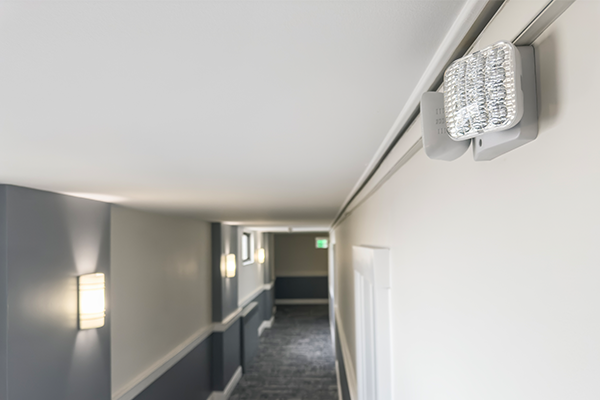
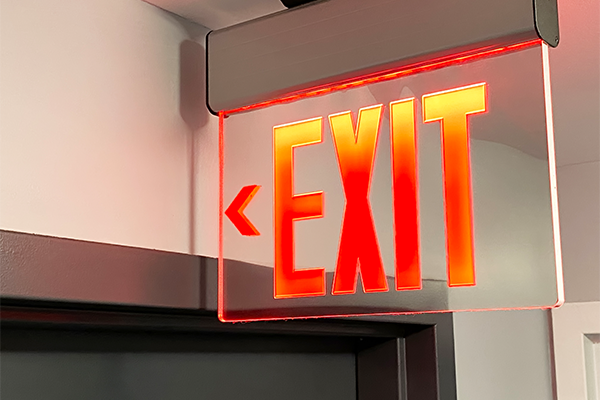
Exit signs, which are commonly equipped with internally lit letters, clearly mark exits and pathways of egress. Emergency lights provide temporary light sources when the main power is lost, giving a structure’s occupants enough time to safely evacuate the building.
2. Primary and backup power sources
Emergency lighting can be connected to a main power source, but it needs another option if power is lost. Battery backup units contain sealed batteries that charge under normal conditions and instantly switch on during a blackout. Generator-powered systems offer extended runtime and are typical in larger structures.
3. Control and monitoring panels
Modern systems integrate monitoring panels that display power status, test results, and fault conditions within an emergency lighting system. Equipping a building with a control and monitoring panel makes it easier to maintain the devices and ensure documents are ready for inspections.
What regulations apply to emergency lighting?
Emergency and exit lighting systems must comply with several important codes and standards. The primary set of requirements comes from the National Fire Protection Association, which sets fire safety standards across the country. NFPA 101 Life Safety Code outlines emergency lighting requirements and is one of many NFPA codes every business should know.
Per NFPA 101, emergency lighting should be installed in areas like:
- Stairwells
- Aisles
- Corridors
- Ramps
- Escalators
- Exit areas
Additional regulations that may apply can include:
- NFPA 70 National Electrical Code
- OSHA standards
- Local building codes
Together, these codes ensure systems are reliable, visible, and effective. By following these guidelines and others set by authorities having jurisdiction, businesses can protect themselves, their employees, and the customers they support.
What are the required tests and maintenance?
Like all life safety systems, emergency and exit lighting fixtures and devices must be tested regularly to remain reliable during a fire, disaster, or other emergency. According to the 2024 edition of NFPA 101, functional tests and visual inspections should be conducted each month for 30 seconds. Annually, emergency lighting systems should be tested for at least 90 minutes to ensure they work during power loss.
Common issues include depleted batteries, burnt-out lights, or wiring faults. Tracking test dates and outcomes is critical, both for safety assurance and audit compliance. If an inspection finds a faulty component, it should be replaced or repaired immediately. Failing to do so can lead to fines and other penalties.
Are LED systems worth the upgrade?
While older incandescent or fluorescent models have served well, newer LED-based emergency exit lighting systems offer significant benefits:
- Lower power use
- Reduced energy costs
- Longer lifespan
- Fewer replacements and repairs
- Reduced clutter with combined units
- Higher visibility
For many businesses, LED upgrades are an investment that can save money in the long run without violating NFPA standards and other codes.
Do emergency lighting systems integrate with others?
Like fire sprinkler systems or alarms, emergency lighting systems can benefit from integration with other life safety solutions. For example, a fire alarm system can connect to an emergency lighting system so that the lights are activated if a smoke detector or fire sprinkler is triggered. If a business has a building management system, integrations can allow facility managers to review all systems in a centralized monitoring position.
The FSS Technologies difference is as clear as day
At FSS Technologies, our comprehensive emergency and exit lighting services include:
- Design and installation of customized layouts of emergency lighting and exit signs that comply with NFPA codes
- Testing and inspection on a monthly and annual basis, each include complete records
- Upgrades and retrofitting for LEDs or combination exit and emergency lighting devices
- Ongoing support with life safety system monitoring, maintenance plans, and 24/7 emergency service
Emergency and exit lighting systems are more than code checkboxes—they’re lifelines during a crisis. Our expert team of NICET-certified service technicians ensures your systems are efficient and optimizes your building’s resources for compliance, safety, and long-term reliability.
Proper installation, timely maintenance, and modern upgrades ensure your building stays safe under pressure. If you’d like us to perform an inspection, support an LED upgrade, or implement an emergency exit lighting plan, we’re here to help. Contact us today to learn more.
Explore Our Other Blogs

Security Integrations with Avigilon Alta
Security systems and integrations For business owners and managers, security systems are a key tool in protecting your customers, property, and commercial operations. There are several components to consider when working to create the best security system for your business, and there’s never a one-size-fits-all solution. A helpful approach to finding the best fit for…

Alarm Monitoring Services: How They Work
An ear-piercing siren and flashing strobe lights create an immediate sense of emergency and indicate an alarm of some sort has been triggered. Now that the alarm has been triggered and the warning sirens have sounded, what happens next? If you have a monitored security system, it won’t just be the neighbors or passerby alerted to…

3 Types of Security Lights
Your security system is only useful if you can see what is going on when you can’t be there. This also means that when it gets dark, your cameras need to be able to capture the image clearly. To do this past dusk will require that you set up security lighting. Additionally, check out the…
ADT Home Security Settlement
ADT home security is facing a class-action lawsuit. The plaintiffs allege that ADT failed to disclose wireless sensors’ vulnerability to evasion and jamming. Why should you care? Although this settlement is for ADT, this is a vulnerability all wireless security systems face. Let’s talk about wireless technology for a second. All home Wi-Fi networks are…
Fire Systems for the Healthcare Industry
Healthcare facilities face uniquely complex life safety challenges and fire hazards. Unlike other commercial properties, hospitals, clinics, and long-term care centers must safeguard patients and protect equipment that’s both expensive and essential to life safety, and maintain 24/7 operations with no downtime. With vulnerable lives at stake, the healthcare industry must adhere to strict fire…

Landlord Security System Installation Guide
Buying a home is one of the most significant investments a person can make. You upgrade your home in many ways—a fresh coat of paint, a landscaping project, or possibly adding a security system. If you go a step further and invest in rental properties, you have to do all those things and more to…

Is the Use of CCTV Cameras in the Workplace Illegal?
Know the Law Business owners are responsible for the security and well-being of their employees and company property. Many companies use technology such as cameras, motion detectors, and other tools to keep an eye on their building or cash areas. Many new businesses and employees may be wondering: Are CCTV cameras illegal in the workplace? Let’s…

Advantages of Having an Alarm System
There are a lot of advantages to having an alarm system. For starters, the National Council for Home Safety and Security says that homes without an alarm system are three times as likely to get burglarized. 3 Benefits of Alarm Systems Peace of mind Protecting your home from intruders is one of the most common…
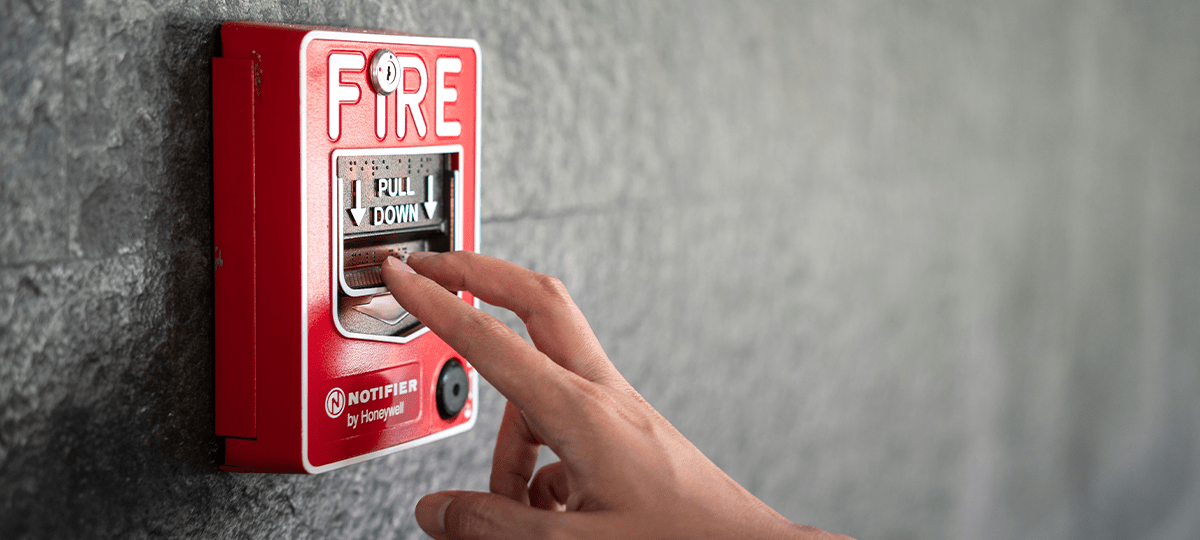
5 Common Causes of Commercial Fires
Many business owners and employees think their chances of dealing with a fire in the workplace are improbable, but the numbers tell a different story. According to the U.S. Fire Administration (USFA), an estimated 116,500 commercial fires were reported nationally in 2021. These fires contributed to 115 deaths, 1,025 injuries, and over $3.6 billion in…

3 Ways to Prevent Shoplifting
Preventing shoplifting is a big deal if you’re a retailer. According to the 2018 National Retail Security Survey, shoplifting continues to be the leading cause of inventory loss for retailers. Loss of stock is a big deal in this country to the tune of nearly $47 billion. The survey also identifies the top ways retailers try…